

Every air compressor produces some vibration during normal operation. But when that vibration increases, changes character, or starts shaking pipework and the surrounding structure, something is wrong – and ignoring it almost always makes things worse.
Key Takeaways
- All air compressors vibrate slightly, but excessive or worsening vibration is a warning sign that must be investigated quickly before it causes further damage.
- The 7 main causes of air compressor vibration are misalignment, rotor imbalance, bearing wear, loose mountings, damaged couplings, pipework stress and air end faults.
- Severe vibration can become dangerous, leading to cracked pipework, air end failure, unplanned downtime and safety hazards for operators.
- CDH Group provides specialist vibration monitoring, air end overhauls and air compressor servicing/repairs across the UK.
- If your rotary screw air compressor or other unit is vibrating, shaking pipework or getting noisier over time, contact CDH Group for a professional assessment.
Why Is My Air Compressor Vibrating?
All air compressors vibrate to some degree. Rotating components, pressure pulsations and electromagnetic forces in the motor all contribute. The critical question is whether vibration levels have changed, because a noticeable increase in vibration, noise or rattling is a fault indicator that should never be ignored.
This affects both rotary screw air compressors and piston or reciprocating units across UK industrial and commercial sites, from factories and workshops to food plants. Vibration can originate from multiple sources: the drive train, the air end, the motor, the base frame, or attached pipework and mounting brackets. It is rarely just “inside the compressor.”
There are seven main causes: misalignment, rotor imbalance, bearing wear, loose mountings, damaged couplings, pipework stress and air end faults. Several can occur simultaneously, and one fault often triggers another. Imbalanced flywheels, a bent crankshaft or a loose belt can each create strong vibrations that cascade through corresponding components. Treat new or worsening vibration as an early-warning sign and arrange a professional inspection before components fail and production stops.
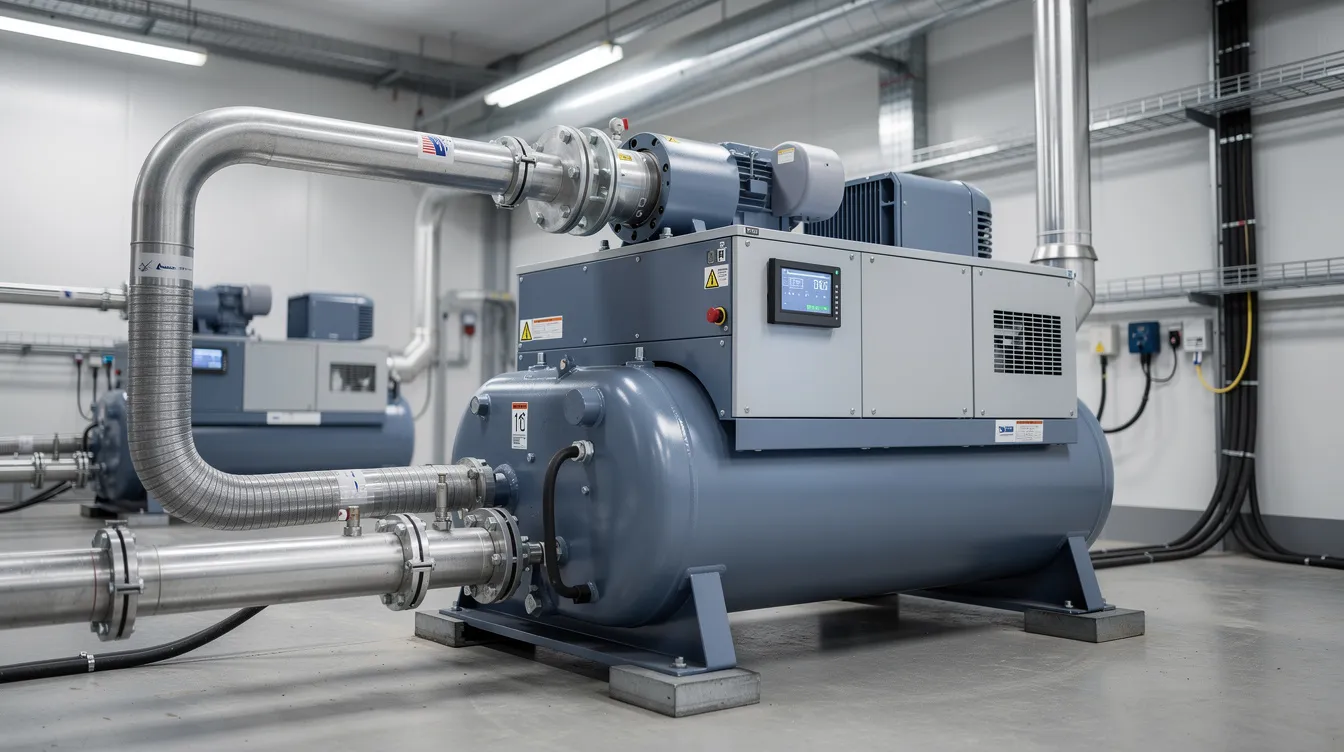
1. Misalignment: When Components Stop Running True
Misalignment occurs when the motor shaft and compressor shaft are not properly aligned. It is a leading cause of air compressor vibration in both belt-driven and direct-coupled units. Misaligned pulleys can cause abnormal vibrations that wear out belts, bearings, and shafts far faster than expected.
Common scenarios include incorrect installation, movement of the base over time, thermal growth during operation, and poor reassembly after maintenance or motor replacement. A unit installed correctly years ago can drift out of alignment as the foundations settle.
Typical symptoms include:
- Increased vibration at the coupling or belt area
- Hot bearings on the drive side
- Rumbling or whining noise under load
- Accelerated wear on belts or couplings – a cracked belt or loose belt is often a secondary symptom
- Visible movement of the compressor on its base
Precision laser alignment and vibration analysis can confirm misalignment. CDH Group’s vibration monitoring service uses exactly these techniques to detect the problem before failure. Misalignment should be fixed promptly to prevent cracked mounting brackets, shaft damage and early air end bearing failure.
2. Rotor Imbalance in Rotary Screw Air Compressors
Rotor imbalance occurs when the rotating assembly of a rotary screw air compressor no longer has an even mass distribution about its axis. An abnormal lobe-mesh frequency in rotary screw compressors is a telltale indicator that something has shifted.
Key causes include rotor fouling from oil or contaminants, material loss or damage to rotor lobes, poor-quality previous repairs, and manufacturing defects that worsen over the years of service. In one documented case, fouling caused vibration to increase from roughly 10 µm to over 75 µm over 20 months before the bearings were damaged and the machine shut down.
Rotor imbalance presents as a consistent vibration at running speed, higher readings at specific bearings, and sometimes a droning noise through the air end housing. It increases bearing and gearbox loads, shortening air end life and raising the risk of catastrophic failure. Professional vibration analysis can isolate imbalance frequencies, and CDH Group’s air end overhaul service can rebalance or replace affected rotors and bearings to restore smooth operations.
3. Bearing Wear and Lubrication Problems
Bearings are critical components that support the motor shaft, gearbox, and air end rotors. Worn bearings cause significant vibration issues and are among the most common sources of trouble. Excessive vibration rapidly wears out motor and pump bearings, creating a destructive feedback loop.
Main causes of bearing wear include age and fatigue, poor lubrication or the wrong oil grade, oil contamination with water, dust, or metal particles, and running the compressor at higher loads or temperatures than designed for. Clearance tolerances in sliding bearings can be as tight as 0.02–0.05 mm; once exceeded, the lubricant film breaks down, and metal-to-metal contact begins.
Early symptoms include vibration combined with high-frequency noise (a whine or growl), rising bearing temperature, and increased oil debris captured in filters or detected in oil analysis results. Advanced bearing faults can cause sudden seizure, shaft damage and air end failure, often leading to expensive emergency repairs and extended downtime. Routine vibration monitoring by CDH Group can detect bearing wear months in advance, allowing planned bearing changes or an air end overhaul instead of a breakdown.
4. Loose Mountings, Mounting Bolts and Base Problems
Even a healthy compressor will vibrate excessively if it is not properly secured to a stable, level foundation. Compressors vibrate if they are not on perfectly level ground, and improper mounting on uneven surfaces is a frequent root cause of performance issues.
Key areas to check:
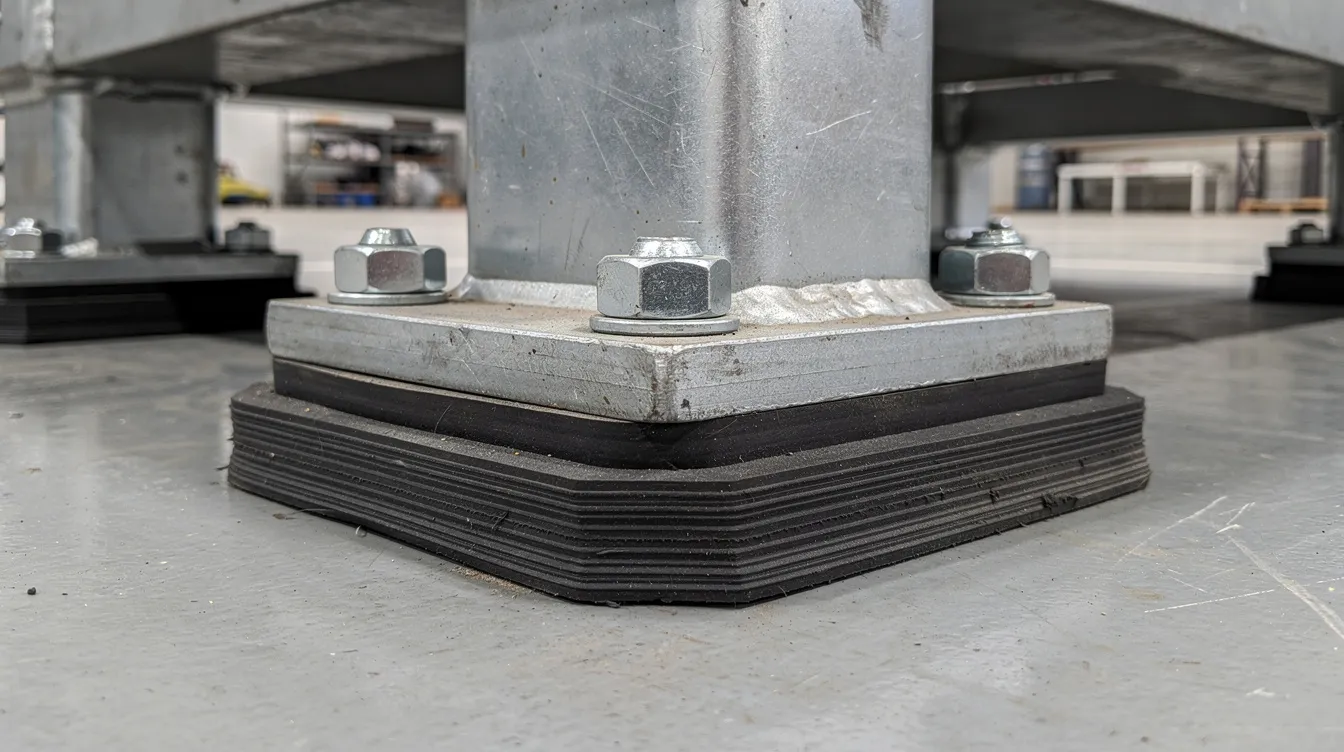
- Loose or missing mounting bolts – faulty mounting bolts can cause excessive compressor vibration
- Degraded anti-vibration pads – worn-out rubber vibration-isolation pads lead to increased vibration
- Cracked or bent mounting brackets – loose mounting brackets cause compressors to vibrate excessively
- Uneven or settling concrete bases
Typical signs include the unit “walking” on the floor, rattling from the frame, visible flexing of mounting plates, and pipework shaking when the machine loads and unloads. Loose anti-vibration mounts can transfer vibrations directly to the floor and nearby equipment. Mounting bolts must be securely fastened, and a service visit should include torque checks on all bolt positions, inspection of the four legs and brackets, and verification that the unit is level and stabilised correctly.
5. Damaged or Worn Couplings
Couplings are the flexible or rigid connection between the electric motor and the compressor air end or gearbox. They transmit torque while absorbing small misalignments. When coupling elements degrade – cracked rubber, worn teeth, missing bolt positions – torque transmission becomes uneven.
This introduces backlash and fluctuating loads on shafts and bearings, often felt as a rhythmic vibration at running speed. Visible indicators include black dust from rubber elements, metallic clatter under load, and visible wobble when the machine starts or stops. A coupling in poor condition should be replaced immediately to prevent damage to the shaft or bearings. CDH Group engineers can replace and correctly align couplings during scheduled maintenance, ensuring the motor functions smoothly with the driven unit.
6. Pipework Stress and Resonance in the Compressed Air System
Vibration is not always generated inside the compressor itself. Stressed or poorly supported compressed air pipework can both cause and amplify vibration issues throughout the compressed air system.
Common installation problems include rigid pipe runs without a flexible connection at the compressor outlet, long unsupported spans, heavy ancillary equipment hanging from the pipework, and sharp directional changes near the machine. Pressure pulsations during load and unload cycles can excite these weak points, causing resonance. Overstiffness in rigid connections prevents natural isolation and feeds energy back into the compressor frame.
Operators may notice vibrating pipes, noisy brackets against walls, air leaks developing near vibration hot-spots, and movement at connections when valves open. A proper installation should include correctly sized flexible hoses, adequate hangers and supports, and stress-free connections. CDH Group can assess and improve existing pipework layouts during site visits.
7. Air End Faults and Internal Damage
The air end is the heart of a rotary screw air compressor, housing the main rotors and bearings that compress the air. Serious internal faults often first appear as abnormal vibration. Key air end issues include advanced bearing failure, rotor contact (rotors touching each other or the housing), internal scoring from contaminants, and gear damage in gear-driven air ends.
Warning signs include a sharp rise in vibration levels at the air end, sudden changes in sound, grinding, screeching, or knocking, rising discharge temperatures, low-pressure output, and reduced compressed-air delivery. Running with a failing air end risks catastrophic mechanical failure, with broken internal parts and oil contamination throughout the system, often making repair far more expensive than an early overhaul. A vibrating compressor showing any of these symptoms needs immediate attention. CDH Group’s dedicated air end overhaul service includes complete strip-down, inspection, re-bearing and testing to restore performance.
When Does Air Compressor Vibration Become Dangerous?
Some vibration is normal. Rapid changes in vibration level, new noise, or visible movement should all be treated as potentially dangerous. Excessive vibration degrades compressor performance, causing numerous pressure fluctuations and potentially a measurable drop in CFM output.
Clear danger indicators include:
- Vibration strong enough to move the compressor skid
- Visibly shaking pipework or mounting brackets
- Cracks in welds or supports – constant stress from vibrations can lead to micro-fractures in metal components
- Frequent fastener loosening
- Vibration can loosen fittings and connections, causing compressed air leaks
Safety risks to personnel are real: pipework rupture, release of hot oil or compressed air, flying debris from failed internal components, and increased noise levels that can exceed UK workplace exposure limits. Operational risks include unplanned shutdowns, damage to connected equipment, rising energy consumption, and premature replacement of expensive air ends or motors. Setting trigger levels via a vibration monitoring programme means maintenance teams know when vibration has moved from “normal” to “action required.”
How Vibration Monitoring Protects Your Compressor (CDH Group Service)
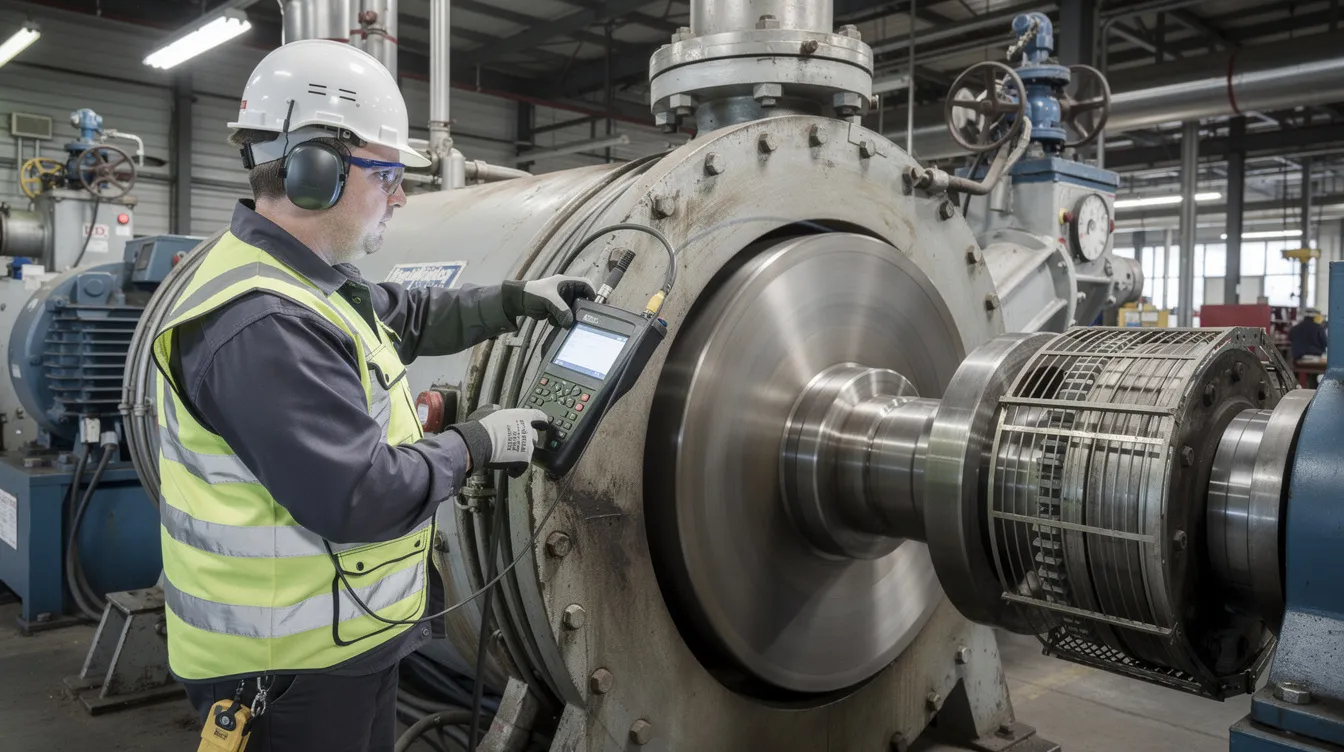
Vibration monitoring is a predictive maintenance tool that regularly measures air compressor vibration and identifies developing faults before they cause downtime. Vibration analysis detects malfunctions months before downtime occurs, giving you time to plan repairs around production schedules. Vibration analysis should start immediately after compressor installation to capture a baseline vibration profile, which is crucial for effective analysis.
The process involves installing or using portable accelerometers on key points – motor, air end, base – capturing vibration in multiple directions, and processing collected data using vibration analysis techniques such as fast fourier transform (FFT) to simplify raw signals into identifiable frequency components. Different faults produce distinct vibration signatures: vibration analysis can identify issues such as misalignment and bearing failure by their unique frequency patterns, allowing CDH Group engineers to pinpoint the root cause accurately. Vibration analysis helps detect compressor faults early, and regular vibration analysis can significantly reduce maintenance costs and downtime.
Business benefits include reduced unplanned stoppages, longer air end and bearing life, optimised service intervals, and better budgeting. Visit CDH Group’s vibration monitoring service page to schedule a survey or add monitoring to your existing maintenance plan.
Air End Overhaul and Repair: Fixing the Root of Vibration
Once vibration analysis confirms internal air end problems, advanced bearing wear, or rotor damage, an air end overhaul is often the most cost-effective long-term fix. A professional overhaul should include a full strip-down, a detailed inspection of rotors, bearings, and gears, measurement against OEM tolerances, replacement of worn components, and dynamic testing after the rebuild.
A correctly overhauled air end reduces vibration through restored balance, new bearings, correct clearances, and properly set gear mesh – all contributing to smoother, quieter operation. A planned overhaul by CDH Group minimises downtime and can extend compressor service life by many years. Request an air end overhaul assessment if your rotary screw unit is older, noisy, or already showing signs of vibration.
Routine Air Compressor Servicing & Repairs to Prevent Vibration
Many vibration issues are avoidable through regular, high-quality air compressor servicing. Proactive maintenance tasks that directly influence vibration include:
- Oil and filter changes
- Belt tension and alignment checks – ensuring no loose belt or cracked belt goes unnoticed
- Mounting bolt torque checks
- Coupling inspections and replacement where needed
- Bearing condition assessments
- Verification of pipework supports and brackets
Combining traditional servicing with periodic vibration analysis provides a comprehensive view of compressor health and helps move from reactive repairs to planned, proactive maintenance. CDH Group offers air compressor servicing and repairs for a full range of brands and models across the UK, covering both rotary screw and reciprocating units. Setting up a service plan with scheduled inspections focused on vibration and reliability is the most efficient way to operate free of unexpected failures.
When to Call a Professional vs DIY Checks
Operators can safely perform basic checks when they notice a new vibration. Simple on-site steps include visually confirming that all mounting bolts are present and tight, listening for any new noise or changes in sound, checking for obvious pipework movement, and noting when vibration increases at start-up, during load/unload, or at specific times of day.
What should trigger a call to CDH Group: sudden changes in vibration, alarms on condition monitoring systems, repeated tripping of safety devices, visible cracking or deformation of mounts, or any suspicion of internal air end or bearing issues. Running a vibrating compressor “until it fails” is far more costly than early intervention. If you cannot identify the cause, contact CDH Group for a vibration assessment visit.
Why Work With CDH Group for Air Compressor Vibration Issues?
CDH Group is a UK specialist in air compressor servicing, vibration monitoring, and air-end overhauls. Their focus is reliability and reduced downtime for industrial users. Key advantages include experienced field engineers, access to professional vibration analysis tools, the ability to work on multiple compressor brands, and the capability to handle both diagnostics and corrective repairs.
Services cover the complete compressed air system, not just the compressor package, including pipework, dryers and ancillaries that may contribute to vibration. A partnership approach with scheduled visits, data-driven reports, and clear recommendations helps prevent sudden failures, supports compliance and energy-efficiency goals, and enables long-term capital planning. Various factors affect how quickly vibration can escalate, so having a specialist on call who understands your equipment and data means problems get fixed before they easily snap into catastrophic territory.
Ready to Tackle Air Compressor Vibration? Contact CDH Group
Excessive air compressor vibration is usually a sign of underlying issues – misalignment, rotor imbalance, bearing wear, loose mountings, damaged couplings, pipework stress or air end faults – all of which escalate if left untreated. CDH Group offers a complete solution: specialist vibration monitoring, expert diagnosis, air end overhauls, and comprehensive air compressor servicing and repairs for rotary screw and other compressor types.
If you have noticed increased vibration, new noises, shaking pipework or frequent fastener loosening on any of your air compressors, get in touch. Visit CDH Group’s service pages for vibration monitoring, air end overhaul and air compressor servicing and repairs to request a site visit or quotation.
Contact CDH Group today to protect your compressed air assets, reduce downtime and improve safety across your operations.
FAQs
All air compressors produce some vibration. “Normal” depends on machine size, speed and mounting design. OEM guidelines exist, but the most practical approach is to establish a baseline for each machine when it is in good condition. Any significant increase above baseline, or vibration you can clearly feel or see where you couldn’t before, should trigger further investigation. CDH Group can define acceptable levels for your specific compressors through a vibration survey.
Continuing to run a compressor with noticeably increased vibration is risky and can turn a minor issue into a major mechanical failure. Slight changes may allow short-term operation under close monitoring, but severe vibration requires immediate shutdown for safety. Reduce load where possible, visually check for obvious issues, and contact CDH Group before returning the machine to full service. A short planned stop is almost always cheaper than an unplanned breakdown.
Frequency depends on how critical the compressor is and its operating hours. Quarterly vibration profile collection is recommended for production-critical units as a minimum. High-duty rotary screw air compressors running 24/7 may benefit from monthly or continuous monitoring. Monitoring should also be performed after major work, such as motor changes or air end overhauls. CDH Group can design a monitoring schedule tailored to your site and risk profile.
Vibration itself is a symptom, not a direct consumer of power. But the underlying faults – misalignment, worn bearings, air end damage – usually increase power consumption. Increased friction, internal leakage, and mechanical losses force the motor to work harder for the same output, and the system cannot regulate efficiency effectively. Resolving vibration issues improves specific power (kW per m³/min) and reduces electricity costs over the machine’s life.
While vibration analysis is most common on larger rotary screw air compressors, smaller units can also benefit, especially where downtime is costly. Portable vibration monitoring is flexible and can be applied to both single-workshop compressors and multi-compressor installations. For very small or low-duty machines, a simplified approach combining periodic inspections and basic measurements may be sufficient. Contact CDH Group to determine the right level of monitoring for the size and criticality of your user equipment.


